Summary
- Administrative burdens
- The high cost of compliance
- How inefficient processes make it difficult to keep pace with the requirements of modern trucking
Well, hello everyone. I’m Rob Abbott with fleet worthy and welcome to the road ahead 2025 trucking and fleet Insights report. I’m again Rob Abbott, Vice President of customer success here at fleetworthy. Before we begin, just a couple of items that we like to cover at the beginning of every webinar here at transport topics. First of all, if you have any audio or visual problems, don’t call me. Call this number on the screen, 800-785-5623
that’s 1-800-785-5623. 107, 855623,
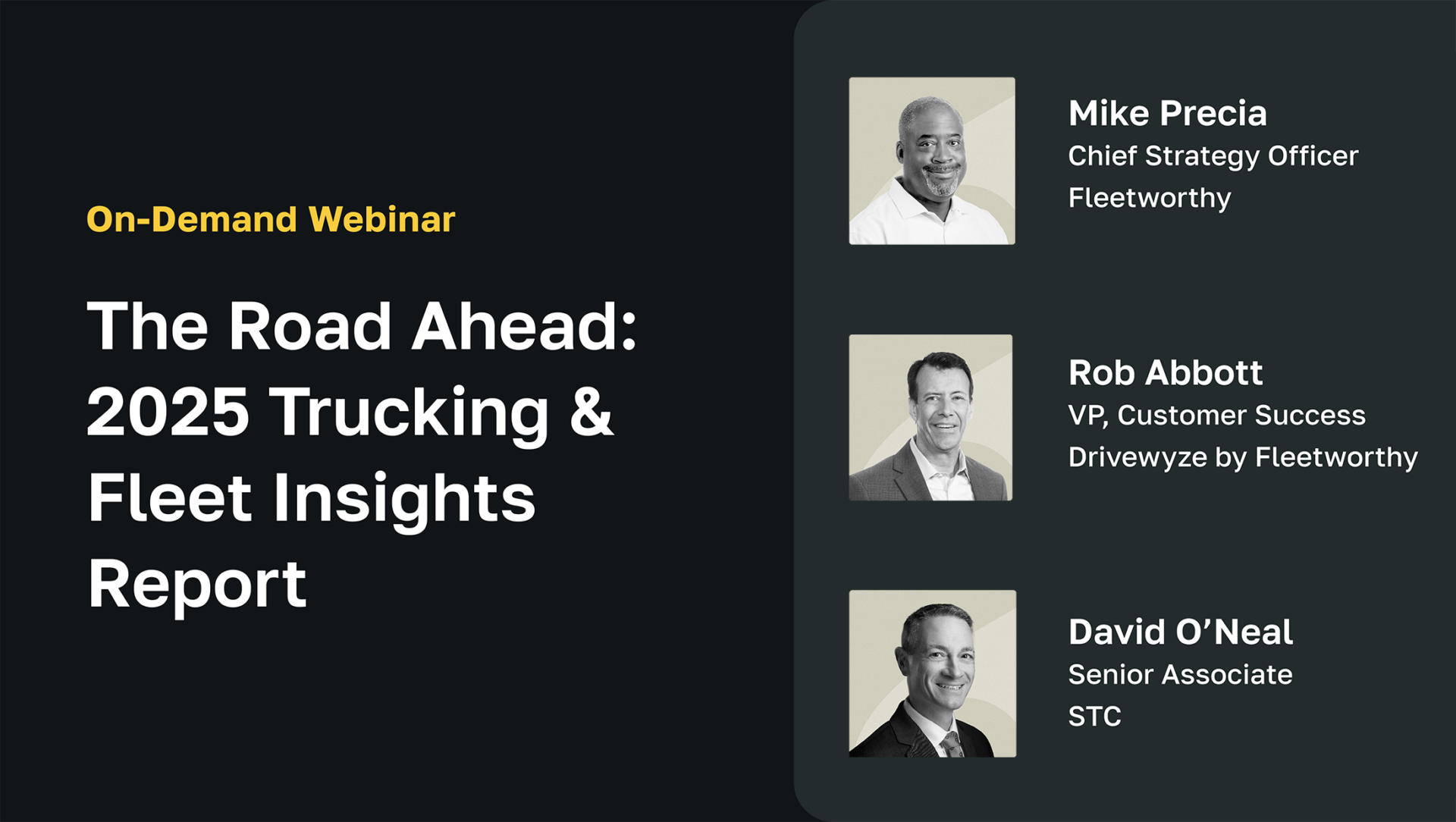
if you have any questions or concerns about your audio or visual during this webinar, you have any difficulties also, as we often do, at the end of the webinar, we’re going to be answering any questions you might have. So as we go through the the content today, if you have questions and you’d like us to answer them at the end of the webinar, simply go down to the bottom right. There’s a little ellipsis icon that’s the three dots next to the chat button. Select it. Then you will select Q and A, and you’ll be able to post your question there. And time permitting, we will answer all the questions there. Also, after the end of this webinar, a copy of the recording will be placed on the transport topics website, in the archive section, so you’ll be able to review it, view it again, or share it with others. So that’ll be there on the transport topics website. We’ll also be providing copies of the slides to everyone as well. One other quick acknowledgement before we get going. So often, these webinars are an opportunity for the sponsor to promote their products or services. We’ll certainly do some of that today, because we’re very proud of what we offer and what we’re capable of doing to help fleets. But understand that this one webinar will not be entirely that. It will primarily be an opportunity for us to share some really interesting insights and some thought provoking discussion about the state of the industry and the things fleets are doing to solve problems. So we appreciate you joining us. Want to introduce our speakers today. First is Michael Perche. Michael’s the president and Chief Strategy Officer of fleet worthy, and he has a very impressive background. He and his team grew fleetworthy to the premier provider that they are today. But it’s impressive background also includes a number of positions, one of them as head of Western Hemisphere sales for a product line of the IBX platform at the global firm, global giant CAP Gemini. They have three quarters of million employees. Many of you probably know Capgemini. So Mike, welcome and tell us a little about Bob fleetworthy, if you would.
So Rob, thanks. You know fleetworthy. We really focus on becoming an extension of all of our customers, safety departments and we, we try to build a moat around our customers from a compliance perspective, by connecting technologies and platforms that they can leverage, and a large group of subject matter experts that understand the changing landscape of the regulatory environment that you all work within, we try to add that and put all that together to help you on your day to day mission to you know, help make The road safer and make sure that you’re running your your your authority in a compliant way.
That’s super that’s a real concise explanation. Appreciate that, and we’ll, we’ll be chatting with you as we go through the results of the study to talk get your reviews on it, but also the sort of things that fleet worthy is doing to help fleets with some of the problems that we identify. So also want to introduce David O’Neill. So many of you know David O’Neill. He’s a trucking industry safety veteran. He’s had leadership roles at FedEx Freight and FedEx Ground. He was also the Vice President of safety and compliance programs at the Arkansas Trucking Association, and he currently is a senior associate with the firm of scope elitist transportation consulting that you’re probably familiar with, and in that role, he offers guidance to fleets, but also uniquely and to our benefit, he has a view into the tents of a lot of different fleets, a big cross section of the industry, so he can see what are the industry pain points and and What are different fleets doing to address those So David, thank you for joining us.
Thanks for having me. Rob, I appreciate it always, always.
So let’s talk about what we’re going to cover today. The study that I mentioned, the fleet Insights report, is one that we generated here. We engaged a third party to do some industry research to help us understand industry trends. So ultimately, we surveyed 300 US based trucking industry professionals, and this was a broad cross section of the industry. It’s logistics companies for hire and private trucking fleets, large and small. And we also included owner operators to get their unique. Sites. And so we it was able, it enabled us to see sort of the disparity or the contrast that different fleets and different sizes and types were experiencing. And we think you’ll find this interesting in terms of where your fleet sits in that on that spectrum, if you will, there were several key findings, and we’ll talk about these key findings today. The first is that the administrative burdens in the industry are growing, and fleets are feeling the weight of that. They we continue to add new things that they have to do, and those are ultimately barriers to operations and efficiency. And so we’ll talk about, what are those burdens and how are fleets dealing with them? You know, not surprisingly, fleets pointed to the high cost of compliance. And it’s not just time consuming and burdensome. It actually has some very direct costs that that really impact efficiency and profitability. And we’ll go through and talk about some examples of that, including things as simple as pulling a motor vehicle record. One of the findings was that manual processes stall efficiency that leads, not surprisingly, again, have pointed out that the way they used to do things, with pen and paper and spreadsheets and emails, it’s just not cutting it anymore, and that manual processes are keeping them from growing just because of the size of their operation, the complexity of compliance and the necessity of automating and deploying new systems. The respondents pointed out that they have a number of doubts with respect to their own compliance posture or their situation, that if they were audited today, they’re not sure how they would, how they would fare, or whether or not they would pass the scrutiny of of litigation in the event that they were to have a crash and someone would scrutinize their compliance stature. So fleets pointed that out to us, and also the the many consequences of safety compliance, both negative and positive, right? So we know. We all know the negative with respect to compliance reviews, litigation, insurance, but the positives with respect to insurance and and shipper selection, so and driver impacts as well, right driver retention and driver satisfaction. So want to dive into these findings. I’ll do that one at a time, and so the first one was, of course, the growing administrative burdens. And there were really three key findings for me in this section of the report. And at the end of this, we’ll provide you the opportunity to get a copy of the full report so you can read it as well, but we’re going to summarize it today. The first was that 55% of fleet operators say complex compliance documentation and paperwork requirements prevent them from onboarding new drivers efficiently, and 40% that probably the largest single group in the in the survey said that maintenance record management is the Most time and regulatory intensive task related to vehicle safety and regulatory compliance. So more than half said that compliance keeps them from onboarding drivers efficiently. So that’s the race to get them in the seat right. We’re all trying to compete for a driver when we have a new one available, and the paperwork requirements are hindering that process and that in terms of record management, maintenance requirements are certainly very onerous. You know, it’s the pre and post trip inspection report documentation, it’s the annual inspections, it’s it’s the tying the repair record to the roadside inspection violation. But at a high level, record management tasks were identified as the number one resource drain when it comes to safety and driver compliance. So I think a lot of our participants today would recognize that, hey, these are messages they’ve been trying to share upstream in their organizations to get additional resources and systems to solve problems. And I think some will find the study very helpful in that regard, as they as they as they seek additional resources internally to address these so, so David, let me ask you, you’ve been in safety for a number of large fleets. You obviously advise large fleets on their compliance programs, and you’ve seen what they’re doing. What do you make of of these findings, and why is it what, what’s going on that’s causing fleets to feel this way?
Yeah, so I would say I’m not surprised by, by any stretch, of the findings of the research there at a high level Rob, I would suggest that, you know, requirements are added, but are rarely taken away. Right from a from a federal government side, from state regulation side state legislative efforts and whatnot. So you know, just a few examples over the last few years, the drug and alcohol Clearinghouse, for example, PSP reports, which are not mandated, but certainly, I would say a sizable majority of fleets and carriers. Does, you know, subscribe to the notion that those do add ultimate value, even though they’re not required. But it does, it does. It does, you know, it does enable a an additional administrative burden, to produce those, to procure those, and then to maintain them, MVR requirements, things of that nature, you know, just some of the more recent things that add a lot of time to the onboarding and hiring process overall. You know, to the to the point on PSP reports, I would say, as I mentioned, not being mandated by regulation, but by to some extent a best practice, because carriers are looking to avoid those nuclear verdicts, which I know we’re going to we’re going to spend some time talking about that, but just some of those above and beyond type of processes and procedures and policies that companies put in place take road the Road Test exception as an example, the requirement regulation is that you either have a road test for a new driver or a valid CDL on record. So some carriers are asking themselves, do I want to accept the fact that the driver has a valid CDL and let it go at that or do I want to take that above and beyond step to to perform the road test, to have the road test conducted and independently or or internally, verify and validate that that driver does possess the skill, the the skills that I’m looking for as a as a safe and compliant motor carrier. So you know, from a defensibility standpoint, you get into those questions and just how much are you not only willing to do, but are required to do, to stay up to date, to stay current with these regulations and these administrative burdens overall.
Yeah, you know, David, I agree with you there, and I have two takeaways from that one is that, you know, prior to us all just accessing regulations via the internet, you know, we all had had big regulatory books, and some of us would keep libraries. We have new additions right whenever things were added, and if you put them on a bookcase many years ago, you could see how the books got thicker, right? Because requirements got added. We added drug and alcohol testing, we added CDL, we added background checks. We’re adding, you know, the clearing house. We’re adding this. We’re adding that. And to your good point, it’s not just about the fact that the regular expands, but because of the emphasis on compliance and the impact of verdicts and insurance costs, we’re doing things that aren’t mandated, but we kind of have to, right so pre employment screening, checks, road tests. There’s lots of things that maybe aren’t mandated, but we all feel we have to do them, and so that’s adding to this burden. Mike, are you seeing this with the customer base as well that you’re serving and in the industry and and you know, how has it changed the business for you? And what you’re seeing that we are doing
well, we look at it and we think that safety professionals, you know, really have two lenses that they have to be kind of looking through. The one is, it’s a very competitive market. You know, drivers are such an important part of their business, so how do I go through all the regulatory steps in an efficient way so I don’t lose that, that driver that we know meets our expectations from a compliance perspective, but then understanding when something bad happens and there’s legal action, the fact that, to Dave’s point, there’s things that are not required, but certainly the more you can show that you’re going beyond just the minimum to drive a safety culture, the better you’re going to get through trials and avoid nuclear verdicts. So there to us. It’s a pressure point for the safety professionals that are trying to run these businesses, you know. So at Fleet, really, we try to partner and come with a playbook that shows that you take safety seriously, and you’re going to go a step beyond just the minimum, so that people understand you’re serious about compliance. And although accidents do happen, that doesn’t equate to negligence. So it’s a lot for these people that are running Safety and Responsible for safety to deal with
Right, right? You know, sure, and I think what you’re doing, really is, is performing the service that a lot of fleets are doing internally and are struggling with. Let me. Let me go to the next section. The next finding, and again, not surprising, is that you know compliance cost comes at a heavy cost. 96% of respondents say they are cutting costs elsewhere to cover compliance expenses. Obviously, you know, the ability to cover these programs doesn’t come from nowhere, right? It has to come from somewhere. And as the number of responsibilities grows, so does the cost to do it. We hope they’re not cutting it from safety, obviously, but they’re doing it from somewhere. To do all these new things they have to do and the requirements that have come. Own. And here’s an interesting 130. 5% of independent owner operators have considered ceasing operations due to the cost of compliance. You know, we’ve heard this before, obviously, and when I dug into the study found that some owner operators were saying, most of them were saying they spent five to 10 hours a month on compliance. That’s a day a day each month, instead of doing productive stuff and earning money, they’re dealing with compliance. Of course. You know, we’ve heard owner operators say this before that. Hey, you know what the this, this job is getting just too difficult. Or when there was an ELD mandate, hey, I’m out. Or when fleet started deploying cameras, I’m out. David, what do you think of this reaction that a third of them said, Hey, I thought about just getting out of the business because of compliance.
Yeah, I don’t think that is entirely unrealistic by any stretch of the imagination. You know, I’m sure, I’m sure there are those who might and probably will leave the industry, over, over, you know, variety of costs, whether, whether compliance or otherwise, I would, I would suggest that these folks are already under tremendous amount of pressure with what has been a soft freight market for the last X number of, you know, a couple of years, let’s say unpredictable volatility and fuel costs potentially issues with brokers, from an from a fairness standpoint, things of that nature. So adding more compliance requirements to the mix is often going to feel like we’re actually be the final straw for them. And, you know, I think in a in a perfect world, and that we will not be in a perfect world, but in a more perfect world, owner operators would be able to focus on running their businesses, generating revenue, and not getting bogged down in the bureaucracy. Because, Rob, to your point on spending a full full day on compliance over the course of a month, when they’re spending more time on compliance than on the road, it’s easy to see why they might start questioning if it’s, if it’s all worth it. And you know, to to some extent, it’s, it’s difficult to blame them.
Yeah, and you know, my takeaway here is, you know, it’s not just compliance. It’s causing them to want to walk away, but it might be the final thing for some of them to say, Hey, I’ve already got waiting time. I’m not being compensated for the Spock markets down. I don’t, you know, there’s, there’s so much volatility in the fuel market, and now I’m spending, you know, a day a month on this stuff. I’ve had it. I’m out right. So, Mike, is that surprising to you, from what you see? I mean, you have a lot of customers who are owner operators. What are they telling you? Yeah, I
think the the mandates that we’ve been, that we’ve seen be pushed out by the government, that, while there’s good intentions, I think it’s creating this uneven situation for the owner operators. And what I mean by that is more and more data is coming out of the cab that the government’s using to decide whether you’re running your business in a in a safe manner or not. And and with all the pressures that both you just mentioned, it’s you know, if you look at the owner operator saying, I can’t keep up with all the data that the government’s leveraging against me if something bad happens. How do I do this? So, you know, our belief is that we can give them technology and support so they can run their business just like the biggest of the biggest carriers can, and have a partner that can keep an eye on that data and make sure that if they’re things that are going in a negative direction, they have support and help to fix that. I think that puts them on better footing. But you know, clearly there’s a lot of pressure to the owner operator to not only, you know, focus on their revenue generating part of the business, but make sure that they’re protecting themselves from a compliance perspective. And clearly that’s not an easy thing for the owner operator.
Yeah, I think, you know, if I were an owner operator, my perspective would be, hey, all these big fleets have, and not even big fleets, medium fleets or fleets. Many sides, you know, have systems and processes and economies of scale to do this more efficiently. And if I’m doing it for just myself, it’s just not that easy. Let’s look at the next finding manual processes are problematic, and that fleet for 51% of fleet operators are struggling with managing ELD requirements. That’s ironic, because you know, ELDs are supposed to make lives simpler, and I wonder what to read into that. But also, 73% of respondents are using a completely or somewhat manual process for tolls. So Mike, I’ll come to you to talk about the tolls piece in a minute. But, but, David, when someone says they’re struggling to manage manage with ELD requirements, what are they talking about?
I think, I think, Rob, what they’re really saying is that they don’t like managing things like personal conveyance. And things that, things that are more visible now that, you know, previously, in a paper, log world, were more difficult to detect, and then an ELD world, it’s it’s still difficult to detect. It’s even more difficult to manage. Now because you’ve got, you know, more precise data on where the driver actually was versus where they went versus where they’re going. You know, on their once they’re once they’re off their 10 hour rest, etc, etc. Now you’ve got to make a management you got to make a leadership decision on does that constitute compliant use of personal conveyance? Just using that as one example, there are others. And, you know, I think from a regulatory standpoint, FMCSA has left that very vague for any number of reasons. Canada’s, they nailed it down, drilled it down with with some more specificity. But I think a lot of folks in the US would appreciate having that level of specificity with regard to the regulation, just to make it a cleaner, black, more black and white type of scenario. So that’s one example. Like I said, there, there are others out there, but it’s, I guess it’s the lack of flexibility that ELD affords in tracking time. That is what carriers, what fleets are saying. You know, in a survey like this, that is stalling their efficiency. They’re spending more time trying to manage that quasi unknown factor.
Yeah, you know, look, my take is it’s certainly a lot easier to have an ELD than it is to break out a ruler and a pen like you used to have to. But it’s always been true that, hey, if you show yourself as off duty, but there’s a receipt seat to show that you were fueling the truck at the time you were on duty. Now, driving and tying that together is is always a bit of a gotcha, but the other gotcha is now with the LD, you got every move, every vehicle movement, right? So the vehicles move, and you got to explain it. That’s raised the consequence, but it’s also raised the bar for documenting every time your vehicle is moving and why. And maybe that’s the new right that they’re struggling with. You know, Mike on the toll piece. I mean, my observation here is that fleets, they break up these responsibilities in different ways. Some have safety and compliance people who are also doing registrations plates, who are also doing fuel management, who are also doing tolls right. So they put the fleet in one place, and a single person has to do that. And so these folks who are doing this, who said, hey, 73% almost three quarters of them, said they have a completely or somewhat manual process for managing tolls. Tolls are pretty simple for me. I you know, I got a balance, I got a transponder. I pay my toll. What’s, what’s the manual process here? What’s, what’s eat, milk?
Well, I think the reality is, if you look at whether you look at the owner operator, who’s working in the business and and focusing on top line revenue by delivering and driving over the road, toll seems simple, but you know, toll is it isn’t perfect, right? So who’s managing those situations where maybe the license plate wasn’t read right, or the transponder didn’t trigger, and now all of a sudden it’s it’s triggering a violation, but you don’t have a person that’s watching that and monitoring that, and you know very quickly that can escalate to be very expensive for the the carrier or the owner operator. And if you don’t have a person you know that’s focusing on that, and what we find is there’s, that’s a lot of there’s a there’s a transient nature in that person who’s responsible for that. So maybe one person understands how to manage tolls. That person leaves. Now, a new person joins and doesn’t understand the the NIT details of how the process works. And that’s the reason, you know, contracting with, you know, like our legacy, best pass someone who can manage your toll program, keep an eye on it and make sure that your violations are escalating is really important. But that’s, you know, not an easy thing to commit to when you’re focusing on top line revenue.
Yeah, no, I’ll agree with that. I mean, I’ve just got, you know, my one vehicle and my exposure is very low. You know, the average car driver, I think that’s 15,000 miles a year. A truck might do 80 to 100 120,000 miles a year. And if you do that at scale, right, there’s lots of opportunities to lose money if you’re not keeping top on top of every time a transponder didn’t read or you got a notification of a violation. I also hear that these times where the gate might not read it. So let’s say you’re you get on to the Pennsylvania Turnpike. It knows you entered, but it doesn’t know you exited in Altoona, right? What happens then? Yeah.
So a lot of times it goes into a black hole. Or an abyss that that you’re not really understanding the the how big of a problem this is until it’s way too late. So, you know, the other examples are, a driver mistakenly grabs their transponder, goes into a new a different truck is some in some different state, you know, how do you monitor all the the ebbs and flows of a toll program so that it doesn’t end up, you know, causing you to lose a lot of money over time. Yeah.
I mean, I think one of my friends told me he got off in Altoona and he but the because the exit gate didn’t read, the toll authority charged him for the full distance, all the way to Philadelphia, right? So he’s paying triple. He has no evidence that he got off mid state, those sort of things, if they go on all the time and again. His average mileage is 15,000 miles a year. My average mileage is 80 100, 120,000 that’s going to happen five or six times a year. That’s real money, right?
And that’s the importance of being able to connect, you know, tolling, to ELD data, to driver behavior data, to fuel tax information, and have someone that can can look at all these things and be able to fight, you know, a mistake or a problem because something didn’t read correctly, or, you know, other things, or finding out that a license plate is read wrong, and it’s Not even your truck, but it’s falling into your your account because it’s reading things wrong. I mean, this is a lot of work that needs to be done, and trying to do that without technology and partnerships, whether it’s a vendor or staff, becomes really tedious and tough to do.
Yeah, for sure. I’ve got two additional findings here I want to talk about before we get to the questions, 65% of respondents are unsure if their fleet would pass a DOD audit, aka compliance review. David, why is that? Why do so many feel that they wouldn’t? I mean, and these are well meaning fleets. These are not golf laws. These are people not engaging in malice. These are people trying to do the right thing. Why are they so uncertain that they would pass?
I would say, Rob, first of all, I’m not surprised by that, by that finding and the research. I think it comes down to a sheer volume of records that need to line up perfectly, and that can be overwhelming for a lot of fleets, especially especially smaller fleets, where you’ve got an individual that’s wearing a lot of different hats, and being being an expert in, you know, driver qualification, file management, and knowing exactly what the criteria are from a retention standpoint, from you know, things that you have to have, pre hire, things you can do post hire, before the drivers dispatched, etc, etc. It just, it gets overwhelming, I think, for a lot of folks. So I’ll use medical cards as an example. Any gap, even unintentional, can raise a red flag. Certainly it escalates. If there’s a gap in a in medical card exam combined in dates from an expiration to a new issuance. If the driver is dispatched, if the driver is not dispatched, then that’s another conversation. But documenting that being able to prove that driver wasn’t dispatched is just adding to that those manual processes, that administrative burden that we already spoke to. So then, as we, you know, just talked about the challenge of hours of service, records, supporting documents. There it’s, it’s just so much to manage on the part of care, on part of a carrier, and especially, I think, on on smaller fleets who don’t have, you know, sizable staffs dedicated to managing these things so and then on top of that, as we’ve already talked about, compliance requirements, those continue to grow. You know, I’ll say, I’ll go back. This is not a political statement, any shape, form or fashion. But in the first Trump administration, there was this policy. I’m not sure it was actually executed to the letter. But this, if you’re going to enact, if a federal agency or administration is going to enact one new regulation, then two have to go, right? So, you know, great idea in theory, if, if we’re looking to remove some of those administrative burdens. Again, I’m not sure how real that ever was in actual practice. So I’m curious to see with with the Republican administration coming back into office, with a, you know, a GOP led Congress from both the House and Senate side, what what those dynamics will be if we, if we end up with something similar to that. And if some of those for everyone and to have to go out type of approach, if that gets, if that gets more traction there, I would say, also rob the drug and alcohol Clearinghouse. I talked about that earlier. It’s a good example, relatively recent addition, but it’s there. There’s already a significant lift for carriers, for fleets just trying to stay compliant. And then I would also say sometimes rules can feel whether in reality or not, there’s some vagueness, some vagueness and uncertainty to a lot of different regulations I’ll use in the onboarding process, the question of how many attempts are enough when contacting a driver’s past employer, pre employment verification, you know what? What meets that standard of good faith efforts and things like, things like that. So it’s, it’s those kinds of ambiguities that don’t just create frustration, but it can set fleets up for potential pitfalls during an audit. So circle back to the question I completely, you know, endorse the findings there on why fleets are significantly concerned they might not be able to pass an audit, even if they are doing their best to do the right things on a daily basis.
Yeah, no, I think that’s interesting, Mike, you were nodding your head there when David mentioned some of that that resonates with you, right?
Well, yeah. I mean, I think they’re all good examples. And the problem is, you know, you can have a carrier that’s, you know, their intentions are to follow the regulatory rules, and they’re serious about safety, but you know, you go down, you get down to the level of an audit, and especially an owner operator, who can’t have their hands around everything. And maybe they did all the things that they were supposed to do, but when the auditor looks at the DQ file, the med card can’t be read, the driver’s license isn’t legible, and unfortunately, that’s a fail, right? Even though that the intentions were right and valid, and they’re trying to do all the right things, but with all the things that they’re trying to do on their data in their day to day job, it’s hard to be that detailed oriented and look at this from the eyes of an auditor to make sure that you’re going to pass the different mandates that government has deployed. All have good intentions, but, you know, we talked about ELDs. The reality is ELDs break down. Sometimes they don’t have coverage. Sometimes, you know, there’s problem with the technology. So what does the driver do to fill those block those blocks of time when that happens, and do it in a way that they can pass an audit. It’s a hard thing to do, right? So, I mean, you can look at every aspect of what we’re trying to do to make the road safer, but there’s complications to to, you know, things that make that very hard for the carrier, the driver themselves. You know. The other example I use is, you know, post active drug drug and alcohol tests pretty straightforward, but when you have drivers that are all over the country in rural areas, and finding places that they can go get that drug test in a timely manner isn’t easy. It’s not always that easy. So again, the intentions are, follow the rags, but the reality is, I’m in a rural area, and there’s nowhere for me to go get a test. How do I get through that and make sure that, if an audit comes, that you can see that you did everything you were supposed to do, and there’s situations where you just can’t,
yeah, not just the audit, but the potential downstream litigation piece,
for sure. I mean, I I look at this instead of asking people, are you sure if you would pass an audit? Maybe another way to ask it would be things like, hey, for every time you have a fuel record that is time stamped, what’s your confidence level that the log says the driver was on duty, not driving right or better yet. Let’s take an example. Guys, you go through a roadside inspection and they find people breaks out of adjustment. It wasn’t more than 20% of the break. So it’s not an out of service. They’re allowed to operate. What happens next? David, what are you supposed to do when you when you get that notification,
violations of violations of violation, right?
So you got to show a repair record, right? Got to mitigate it. How to mitigate it? How soon do you have to mitigate that? And let’s say you don’t have a record that you repaired it, and you have a subsequent crash, right? You’ve created this trail now, right? So the inspector identified this violation. You have no record of mitigation All right, how do you tie all that together? Right? So we’re all curating trails for ourselves, I think, and we all know that. I think that’s why we’re we’re at that number of 65% would you think that’s a fair assessment?
Mike, yeah. I mean, I think when I look at the the companies we work with, this is some of the things that trigger them reaching out to us for assistance, is that uneasy feeling of, you know, could we successfully get through an audit? And part of the problem is, if you ask, where do you go when you’re prepping for an audit? A lot of the answers are, we’re going, you know, Excel spreadsheets, filing cabinets, different systems. Systems. And you know, having to go to all these different disparate systems to prove that you’re running a compliant or a compliant authority, that’s tough. So we’re trying to help people get things to a centralized location so they feel like, hey, we could get through an audit, because all the data that we need to get through, it is at our fingertips.
David, let me ask you, looking at past employment history. So you got to inquire with the employers or the drivers, past employers the prior three years, right? If there’s a gap in their past employment, they ended in August somewhere, and they started somewhere else in December, and you got this, where did they go? Right? Are you obligated to investigate that, and if not, what’s the risk if they were someplace doing something disqualifying, excuse me,
that question just chokes me up. Rob,
so there’s not just a quick, you know,
32nd answer on this, it always, it always depends, yeah, I think you there’s a responsibility to investigate to the extent possible, to document. You know, if you can’t have factually validated from a previous employer standpoint, then the driver attests, in some shape, form or fashion, that this was what was going on. But if the drivers otherwise qualified, then, you know, and okay, now you’re into an HR conversation. I didn’t hire that driver. He was, he was otherwise, he or she was otherwise qualified for the position. So carriers were certainly, you know, put into some maybe awkward circumstances and scenarios
in those in those cases, right?
The rules are very, very vague. Yeah, let’s go to the I think this is the final finding. The consequences of compliance are severe, and they know it. Not surprisingly, 90% of respondents have some level of concern over their nuclear verdicts. I guess I am a little surprised, because, you know, we talk about it so much, and I think you know, it’s a little bit of, you know, yeah, but the worst could happen, that maybe fleets are a little bit numb to it. But then you hear about these, these just outrageous verdicts. I think there, there was one recently, I think I was at a presentation. Somebody described it as a thermonuclear verdict, right? So a nuclear verdict is any case that has it’s about 10 million or more, right? And in 2023 I found this on the internet. And because it was on the internet, you know, it’s true, I’ve been taught that. So I found this on the Internet. In 2023 there were $165 million in nuclear verdicts for the trucking industry. 160 5 million is awful. I gotta tell you, we are dwarfed in our industry by by the real estate folks and the chemical industries, their their amounts are like in the 2 billion range, right? But what do you take of this that people are still concerned about it? Do they think they’re going to be subject to one?
Yeah, if you’re starting a mirror of I, I am 0% surprised that respondents have that level of concern. And I would also say that, you know, depending on the size of your fleet, I know the common, commonly accepted threshold, as you stated, is 10 million right to be considered a nuclear verdict. But if I’m a small, family owned business, a $1 million verdict can be nuclear, right? So it’s all it’s all relative, it’s all scalable, depending on size, scope of my, of my operation. So So no surprise on on that percentage of respondents and to your point, also, verdicts just continued to get more. Jaw dropping when you see a nearly half billion dollar, a 465 ish million dollar verdict against against an OEM, against the trailer manufacturer who was compliant to the regulations at the time, but a jury said, Well, no, you could have done more. You should have done more, and tags them with a half billion dollar verdict. It’s just it’s staggering, and not just for the outcome in and of itself, but for what it represents for the risks that carriers face, and now upstream OEMs also face whether or not they’re literally legally compliant to the regulation. So clearly insurers are paying, paying, you know, tremendous amount of attention to this and that. Translates into fleets seeing increases in their rates that are directly tied to these verdicts, because they’re going to spread the risk, right? And I get it from business perspective, you spread the risk out. So it’s a vicious cycle. You’ve got rising verdicts that push up insurance costs. Those costs make it more difficult for fleets to operate. So then, in some unfortunate should not happen, but we know the realities of the world we live in. In some cases, then fleets may start to cut a corner here and there, which then what leads to more verdicts and on and on and on On we go. So I would summarize that as a long winded way of saying it’s clear fleets are not numb to this. They’re simply bracing for impact.
Yeah, Mike, Mike, you’ve been around the insurance industry a lot. You know a lot of people. Insurance industry. You’re on the board of blue eye, that blue wire, which is doing something about nuclear verdicts. What are your customers telling you about their concern and what they’re doing here to address it?
Well, I think the reality is, no matter if you’re a small carrier or one of the largest of the large the problem with compliance and how it read threads to nuclear verdicts is understand that the clock’s always ticking even before something bad happens, right? So you do things to try to be proactive, like monitoring MBRs, but if you don’t have the staff to react to things that are negative, and they sit there and fester and then somewhere something bad happens, and an attorney can look at all this data and say, Oh, so you knew about these, this person who had a suspended license, but you didn’t do anything about it, and you didn’t do anything about it for x number of months. There’s just this, this equation that gets tough for a carrier to keep their arms around all the things that they’re doing to try to drive safety. And you know, we talk about the nuclear verdicts and the but we don’t talk about, what does it do to insurance premiums when these things happen? I mean, there’s today’s point. A nuclear verdict for a small carrier is it could be a very small claim when compared to that same type of verdict against a larger carrier. So it’s a, it’s a very hard scenario for these carriers to keep their arms around.
Yeah, I think they do see them, and in the back of their minds, they think I could be the next one. They also know the impact on insurance. And I, I think it’s one we all see, right? And the parallel might be, we’ve seen it with medical costs and personally, with our own health insurance programs that, you know, 10 years ago, I might have had a deductible of, you know, 200 or $500 and I think many of us are accepting higher deductibles in return for lower premiums. No different for trucking fleets, they’re having to do the same thing. They’re accepting much higher deductibles in return for getting coverage. I think I heard one quote in the press this week, I’m paying twice as much for half the coverage because I’ve had to increase my deductible, right? That’s not, that’s not, that’s not a far fetch. That is not an exaggeration. If you talk trucking fleets, you’re paying twice as much for half the coverage because they’re having to increase their deductible, and they’re also having to reserve more for claims. So I read one article that said that smaller cases that you know, usually you used to have to only reserve 50k for it. Now you’re reserving three or four times for that very same claim. It’s smaller. Fleets are very reluctant to take cases, and insurers take cases to jury trial, which means they’re settling. And they’re settling at 3x 4x what they used to have to settle for, because they don’t have to have to settle for nuclear or thermonuclear in the end, right? So, so that is certainly very costly. Think we will. We’ll go now to some questions and answer. Unless you guys have any final thoughts on that subject that you’d like to share. I think we’ve, we’ve talked that one through. I’m about to go to the Q and A. So again, in the bottom of your screen, there’s three little dots called an ellipsis. If you have questions, you can click on that and put them in the Q and A box. While we do that, we’ve also issued a survey to you all that you’ll see in the bottom of your screen. We encourage you to answer that if you have an interest in learning more about fleetworthy and what we do to help fleet solve problems. We we would welcome the opportunity to share more information with you, and so there’s a survey there, and you can tell us if you’d like to hear from us and learn more. We will also be sharing the the slides from today’s presentation. So if you have any any additional need for those, we’ll be sharing those out, and we will also be sharing with you copy of the report and the recording. So let me ask you guys, you know, a couple of questions. One here was talking about the cost of compliance. For both of you, what are you seeing? Is the most, you know, dramatic things that are increasing cost. And so in my view, when I was a safety professional in the industry, for me, one of them was Motor Vehicle records. I used to pay routinely $8 for a motor vehicle record. But then the state started figuring out that they could charge non residents a whole lot of money for an MVR, what are the sort of things you guys are seeing that are causing the cost of compliance to rise? Mike, maybe I’ll start with you, because you probably spend more time doing
it well. I mean, I think you hit on some of them. I think the one that I will focus on is, as much as technology has helped improve this, the safety profile of, you know, the carriers, you know, making the roadways safer. There is a human resources aspect of you know, as your carrier and authority grows, the people that you need to employ to kind of keep their arms around all the data that’s coming out of the cab. So, you know, when you when you put a carrier in a position like, do I go hire a driver who’s, you know, positively impacting top revenue, or do I go hire some safety staff to, kind of help continue to build this moat around us from a safety perspective that can become very expensive, right? And then, if you’re also working through with a lot of disparate systems. How do I Where do I invest to get these systems talking to one another, one another? So you’ve got this cost that comes along with keeping your infrastructure up to date, you know, responding to the change technologically, so that you can build solutions to try to keep stay in front of all the regulatory changes in the regulatory landscape, and this all becomes money that they have, you know, to be spending. And then add to that devices, whether it’s dry cams, ELDs, and all the things that come to getting those, those devices in the cab, those are all investments that you know, follow in the compliance, you know, budget. And you know, carriers are struggling to find the the budget to make the the investments they need to make to stay ahead of all this.
Yeah, that I would agree with that particularly, you know, I think when we originally saw the PSP program released, you performed an inquiry for each driver. And you know, that was very costly, and it was just one more thing that police were saying, hey, exponentially, this is really blowing up my budget here. David, what’s your observations here? What do you think is costing carriers the most?
Yeah, so I would agree with everything Mike said, some combination of the human, you know, the staffing needs to manage the technologies, frankly, the technologies, in and of themselves, that come from a compliance standpoint, and then the, you know, the human beings that have to navigate that and put things together, you know, producing reports for leadership, whatever the case may be. I think there’s significant costs there. The other thing, the one other thing I would add to that is, you know, the equipment costs themselves. So not just the the ELDs and cameras and, you know, the back end systems, but the actual infrastructure, the trucks are so much more advanced than they were 2025 years ago, those costs have dramatically increased. The cost of a tractor today is vastly different than it was when I when I started. So because it it comes with so much more right, so much more technology on it, embedded ingrained in it, built in from the start, so that that would be the one other thing I would throw in.
You know, I have an old boss who once often said, No good deed goes unpunished. And in this case, I think the good deed is, you know, we’ve gotten all these new systems and technology that provide us actionable data. That’s the gift, right? That’s the good deed. But now we have to act on that data. We got to do something with it right, otherwise you’re culpable. So we have evidence of drivers engaging in behaviors from the video. We have evidence of background information of past behaviors. We have to find evidence of mitigation. So we’ve got all these powerful tools to provide us with greater insight, and yet it just it adds up to more and more responsibility for the fleet to actually act on that. And of course, failing to act on it is a is a problem for for fleets as well. So I think we’ve run close to being out of time here, guys, I want to thank you both very much for your assistance and and your willingness to share your thoughts with our group. Again, we’ll be closing this out, but if you if you are interested in the slides from today’s presentation, copy the webinar and a copy of the study we talked about, we will be sharing that with you in the next coming days. So again, thanks everybody for joining us, and we’ll see you next time.
Read Transcript
The Road Ahead: 2025 Trucking and Fleet Insights
Mike Precia, Rob Abbott, and David O’Neal discuss the key findings in Fleetworthy’s exclusive industry report based on a survey of more than 300 fleet operators and independent truckers. Topics include administrative burdens, the high cost of compliance, and how inefficient processes make it difficult to keep pace with the requirements of modern trucking.