As operational risk accelerates across North American freight corridors, fleets are increasingly looking for ways to deliver timely, context-rich safety information directly to drivers. Weather volatility, cargo theft, high-risk parking zones, and regional chain-law requirements have all made route planning more complex. But even the best planning can’t anticipate every hazard a driver encounters on the road.
While fleets can’t control weather patterns, regional enforcement trends, or criminal activity, they can control how prepared drivers are when those risks appear.
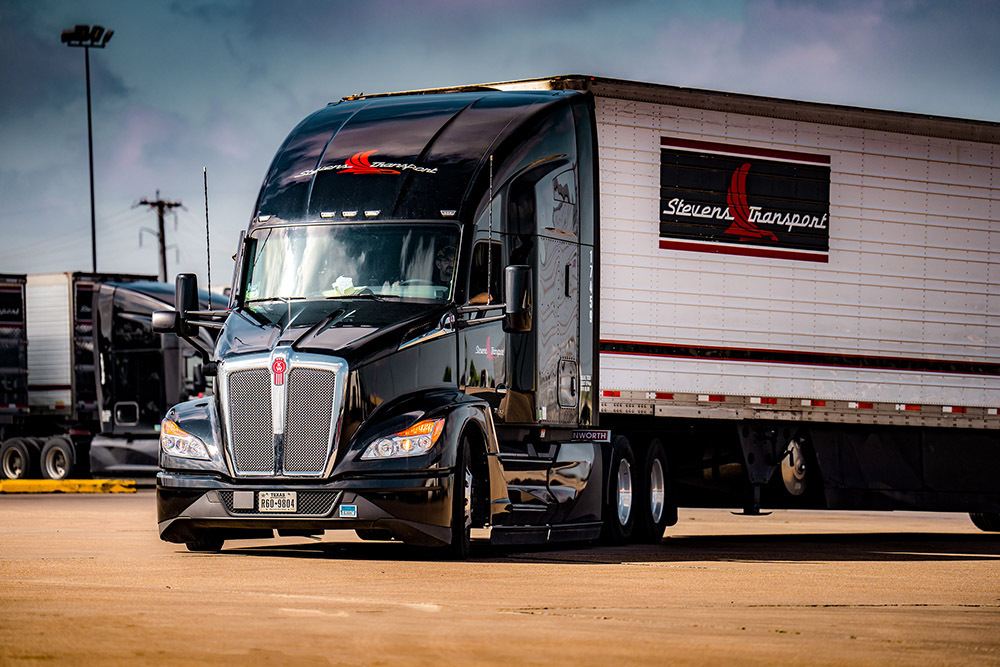
Stevens Transport—one of the nation’s largest refrigerated carriers—has been working to close that awareness gap by adopting real-time, location-based safety alerts. The carrier’s approach offers practical insight into how proactive, data-driven messaging can support drivers and reduce incidents without adding operational burden in an increasingly unpredictable environment.
Why Fleets Are Turning to Proactive Safety Signals
Industry safety leaders often point to a fundamental challenge: drivers face dynamic risks that cannot be mitigated by static training alone. Traditional safety programs—while foundational—operate primarily before or after a trip. The need today is for situational awareness in the moment, when it can meaningfully influence driver behavior.
In a climate where external risk is accelerating, fleets are reassessing which parts of safety and compliance they can still actively control—and where timing, not training volume, makes the difference. Stevens Transport recognized this shift as their network expanded and daily operating conditions grew more unpredictable.
According to Ken Resta, Senior Director of Safety, the team needed a way to reach drivers at the point of decision—and to tailor communications to the exact risks along their routes.
“ELDs are great workflow tools that allow us to facilitate communication with our fleet,” Resta said. “Our partnership with Drivewyze by Fleetworthy enhances our ability to deliver customized messaging to our fleet in real time.”
Inside the Program: Using Custom Geofencing to Anticipate Risk
Stevens implemented Safety+ by Drivewyze by Fleetworthy, which enables fleets to create geofenced safety zones that send drivers targeted alerts based on their precise location and operating environment. Layering these capabilities on top of general-purpose weather or traffic notifications creates a complete sense of readiness and adjustability for drivers.
Theft and High-Risk Parking Zones
Cargo theft represents one of the most expensive—but also preventable—sources of operational loss when drivers are given the right guidance at the right time. In areas with elevated cargo theft, the Stevens team designed alerts instructing drivers not to park overnight and, in moderate-risk locations, to secure trailers with locking devices.
“If a single geofence alert prevents one theft, it’s already paid for itself,” Resta said. “We’ve had situations where one cargo loss can cost tens of thousands of dollars in claims and downtime.”
Predatory Towing Prevention
While enforcement practices vary by market, Stevens identified towing exposure as an avoidable cost and distraction—one that could be reduced through proactive awareness rather than post-incident recovery. Stevens also established alerts for areas known for aggressive towing enforcement. When drivers approach these zones, they receive reminders to park only in approved locations—an issue that has surfaced with increasing frequency in certain metro markets.
Chain-Up, Weather, and Grade Alerts
In mountainous regions, Stevens configured alerts to trigger roughly 20 miles before chain-up areas or challenging terrain. This gives drivers enough time to prepare, adjust speed, or modify trip plans.
“These alerts provide proactive, timely notifications, allowing drivers to adjust trip plans with up-to-date messaging,” Resta noted.
Reinforcing Driver Trust
One notable component of the program: alerts are tied directly to Stevens’ safety department not an anonymous system.
“We want drivers to know these alerts are from us, their safety team, not a third party,” Resta said. “It builds trust and reinforces our culture of proactive communication.”
Early Outcomes: More Awareness, Fewer Incidents
Stevens Transport reports that its investment in proactive alerting has yielded benefits across both operations and driver engagement.
Operational Improvements
- Reduction in high-risk incidents related to theft, towing, and hazardous terrain
- Fewer towing disputes and associated administrative work
- Improved weather and chain-law responsiveness
- More informed decision-making during unexpected road events
Driver-Centered Benefits
- Higher satisfaction and confidence, especially among newer drivers
- Improved communication flow between drivers and the safety department
- Greater sense of support while navigating unfamiliar regions
For Resta, the most meaningful gains appear gradually, after drivers adapt to and develop trust in the system.
“Every change takes about 90 days to ripple through culture,” he said. “The strategic decision to partner with Drivewyze by Fleetworthy benefits our drivers, improves collaboration, and makes drivers feel supported. That’s when you see the real ROI.”
What Fleets Can Learn
While there is no way to completely eliminate risk, forward thinking carriers can control readiness. Investing in real-time awareness increases control over outcomes, no matter how volatile the conditions.
Stevens Transport’s experience highlights several broader industry takeaways:
1. Safety Alerts Work Best When They Are Specific, Not Generic
Highly targeted, geofenced messages drive greater awareness and reduce alert fatigue.
2. Technology Must Support Safety Culture, Not Replace It
Drivers respond when alerts reflect their safety department’s voice and priorities.
3. Real-Time Alerts Complement Other Safety Technologies
Tools like dashcams or post-incident coaching address what has happened; proactive alerts address what may happen next.
4. Soft ROI Is Often as Important as Hard ROI
Reduced stress, avoidance of ambiguous situations (like predatory towing zones), and improved safety communication can meaningfully affect retention.
Looking Ahead
As fleets evaluate their 2026 safety strategies, many are asking how to better equip drivers for rapidly changing road conditions. Stevens Transport’s real-time alerting program offers one example of how carriers can use existing in-cab technology to strengthen driver awareness and build a more resilient, proactive safety culture.
Stevens Transport’s approach illustrates how controlling what’s inside the operation—information timing, driver awareness, and communication—can help fleets stay ready, resilient, and confident no matter what the road brings.