Driver Qualification File Management
Simplify one of fleet compliance’s most complex requirements by centralizing records, tracking expirations, and keeping every driver audit-ready.
Learn More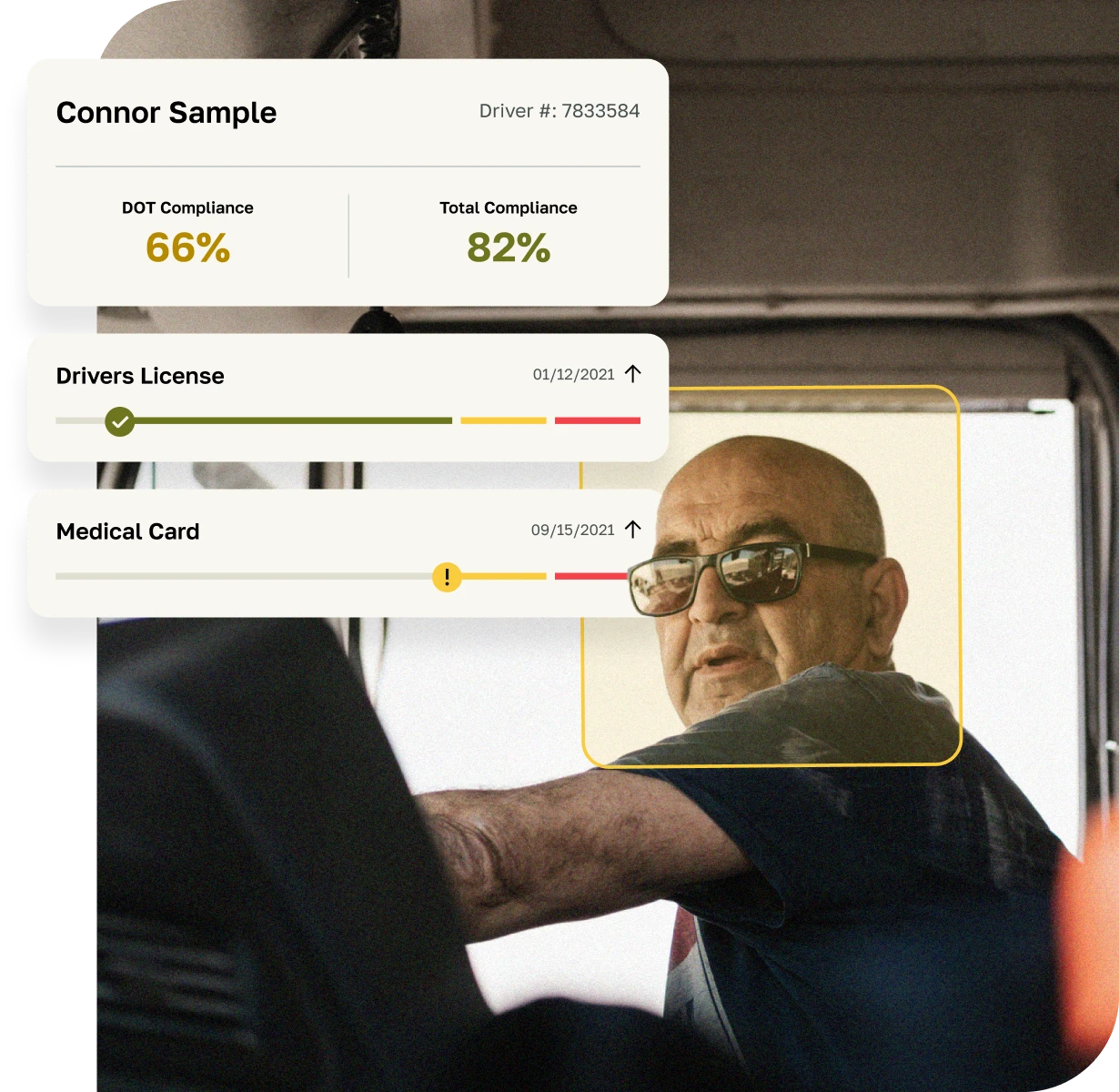
Driver Qualification File Management
Simplify one of fleet compliance’s most complex requirements by centralizing records, tracking expirations, and keeping every driver audit-ready.
Learn More
Boyle Transportation Elevates Safety Standards
Boyle Transportation needed to maintain its industry-leading safety and compliance standards after the retirement of a key compliance leader, prompting a shift toward more modern, resilient systems.
Read More
Trucking fleet compliance refers to adhering to all Department of Transportation (DOT) and Federal Motor Carrier Safety Administration (FMCSA) regulations that govern commercial truck operations. These rules ensure safety, accountability, and legal operation across the transportation industry.
Key components of trucking fleet compliance include:
Driver Qualification Files (DQFs): Verifying CDL licenses, medical certifications, and employment history.
Hours of Service (HOS): Monitoring drive time using FMCSA-approved Electronic Logging Devices (ELDs).
Vehicle Maintenance: Documenting inspections, repairs, and preventive maintenance schedules.
Drug and Alcohol Testing: Following FMCSA Part 382 testing requirements.
Recordkeeping: Maintaining documentation for audits and compliance reviews.
Proper compliance reduces violations, prevents accidents, and improves a carrier’s Compliance, Safety, Accountability (CSA) score. Many fleets use compliance management software and telematics systems to automate documentation, track renewals, and remain audit-ready year-round.
In short, trucking fleet compliance is the foundation of safe, efficient, and legally sound operations.
Trucking fleet compliance is a critical part of operating in today’s highly regulated transportation environment. It ensures that every truck, driver, and trip meets federal, state, and local safety requirements, protecting both your business and the public.
Non-compliance can lead to costly fines, shutdowns, and reputational damage, but proactive compliance management keeps fleets safe, efficient, and audit-ready.
Trucking fleet compliance means meeting the legal and safety standards outlined by the Federal Motor Carrier Safety Administration (FMCSA) and the Department of Transportation (DOT).
These regulations cover:
Driver qualifications and ongoing monitoring.
Vehicle maintenance and inspection requirements.
Hours of Service (HOS) limitations.
Drug and alcohol testing for CDL drivers.
Accident reporting and documentation.
Fleets must maintain records that demonstrate compliance and produce them during DOT or FMCSA audits.
FMCSA Part 391 requires carriers to maintain accurate Driver Qualification Files (DQFs) for every driver. These must include:
Valid Commercial Driver’s License (CDL).
Current Medical Examiner’s Certificate (DOT physical).
Employment application, background checks, and Motor Vehicle Records (MVRs).
Safety performance history and drug/alcohol test results.
Tip: Use digital compliance software to track expirations and automatically flag missing documents.
Drivers must follow strict HOS regulations to prevent fatigue-related crashes. Fleets are required to:
Use FMCSA-certified Electronic Logging Devices (ELDs).
Monitor HOS limits (11-hour driving, 14-hour on-duty window).
Retain logs for at least six months.
Train drivers on ELD use and certification.
Benefit: Accurate logging improves safety and reduces CSA violations.
FMCSA Part 396 requires systematic inspection, repair, and maintenance of all commercial vehicles.
Conduct daily pre-trip and post-trip inspections.
Keep annual DOT inspection reports.
Record preventive maintenance and repairs.
Retain maintenance files for at least one year while in service.
Tip: Implement preventive maintenance software to schedule and track every inspection.
Under FMCSA Part 382, fleets must maintain a controlled substances and alcohol testing program.
Conduct pre-employment, random, post-accident, and reasonable suspicion testing.
Register with the FMCSA Drug & Alcohol Clearinghouse.
Maintain testing records and supervisor training documentation.
Non-compliance here is one of the most common and serious FMCSA violations.
Carriers must document all DOT-reportable accidents for at least three years, including:
Police and crash reports.
Corrective actions taken.
Retraining or disciplinary records.
These files prove your fleet’s commitment to safety and help identify risk trends.
DOT and FMCSA auditors require easy access to accurate records.
Store all compliance data in a centralized digital system.
Ensure retention periods align with federal requirements.
Conduct regular mock audits to verify readiness.
Pro Tip: Well-organized records often prevent full-scale compliance reviews.
Legal Protection: Avoid fines, penalties, and operating suspensions.
Improved Safety: Reduces accident risk and driver fatigue.
Lower Insurance Costs: Strong compliance records demonstrate low operational risk.
Better CSA Scores: Leads to fewer inspections and improved reputation.
Operational Efficiency: Automating compliance reduces administrative burdens.
Compliance doesn’t just protect your business, it strengthens it.
Modern fleets use compliance management software and telematics to automate compliance oversight. These systems:
Integrate ELD data with driver files and maintenance schedules.
Provide real-time alerts for expiring licenses or inspections.
Generate audit-ready compliance reports instantly.
Sync with the FMCSA Clearinghouse for seamless recordkeeping.
Result: Less paperwork, fewer violations, and greater operational control.
Missing or incomplete driver qualification files.
Expired medical cards or CDLs.
HOS and ELD log errors.
Incomplete maintenance or inspection records.
Failure to conduct required drug testing.
Inadequate accident reporting.
Solution: Regular internal audits, digital tracking, and driver education can eliminate most violations before they occur.
Automate Document Management: Use digital compliance tools.
Schedule Regular Training: Keep drivers and staff updated on FMCSA rule changes.
Perform Quarterly Audits: Identify and correct gaps early.
Monitor CSA Scores: Track and address violation trends.
Integrate Telematics: Use data to improve compliance and safety performance.
Compliance is easier and more reliable, when built into daily operations.
Trucking fleet compliance is the foundation of safe and successful operations. It ensures your fleet runs legally, your drivers stay safe, and your business avoids unnecessary risk.
By integrating technology, training, and proactive oversight, fleets can transform compliance from a regulatory burden into a competitive advantage.
Staying compliant means staying operational, profitable and trusted, mile after mile.