Driver Qualification File Management
Simplify one of fleet compliance’s most complex requirements by centralizing records, tracking expirations, and keeping every driver audit-ready.
Learn More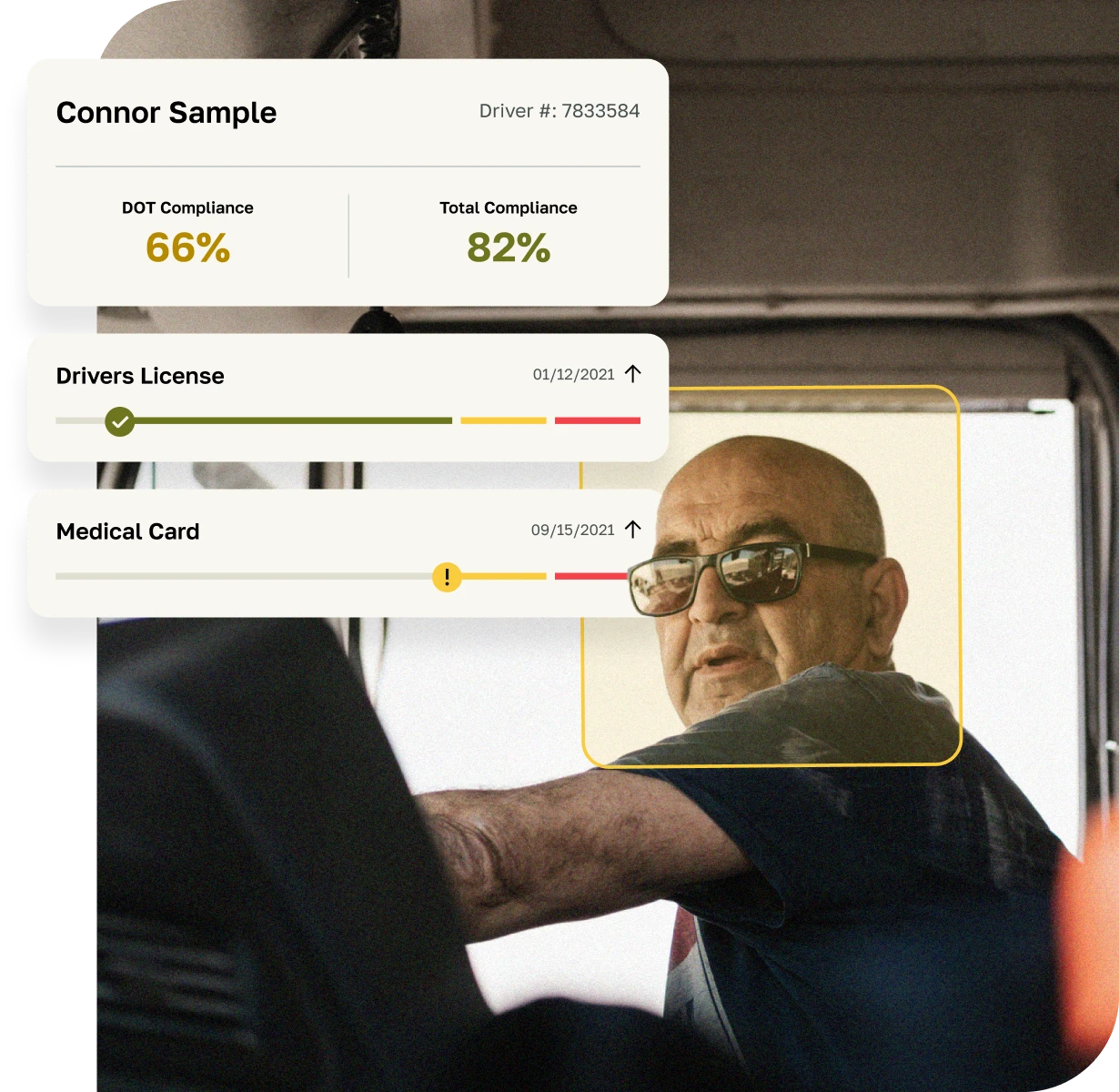
Driver Qualification File Management
Simplify one of fleet compliance’s most complex requirements by centralizing records, tracking expirations, and keeping every driver audit-ready.
Learn More
Join us for our 2026 Roadshow
Learn more about Fleetworthy's vision for the future, and how we can help your fleet stay ready in all circumstances
Learn More
ELD compliance solutions are systems that help fleets meet the Federal Motor Carrier Safety Administration (FMCSA) requirements for Electronic Logging Devices (ELDs). These tools automatically record a driver’s Hours of Service (HOS), duty status, and driving time to ensure compliance with federal safety regulations.
A complete ELD compliance solution typically includes:
FMCSA-certified ELD hardware and software for accurate time tracking.
Automatic data transfer for roadside inspections.
Compliance dashboards for fleet managers to monitor logs and violations.
Alerts and reporting tools for Hours of Service (HOS) violations and maintenance needs.
ELD solutions simplify compliance, reduce manual paperwork, and improve safety by preventing fatigue-related violations. Many modern systems integrate with telematics and compliance platforms to automate documentation, track driver behavior, and maintain audit-ready records.
In short, ELD compliance solutions make it easier for fleets to stay legal, efficient, and safe while meeting all FMCSA logging and reporting standards.
Since the Electronic Logging Device (ELD) Mandate took effect under the FMCSA, fleets have been required to use approved electronic systems to track driver hours and maintain compliance with Hours of Service (HOS) regulations.
ELD compliance solutions go beyond simple log tracking, they automate compliance management, reduce human error and help fleets operate more safely and efficiently.
An ELD compliance solution is a combination of hardware, software, and reporting tools designed to meet FMCSA standards. It automatically records driving time, on-duty hours, and rest periods, replacing traditional paper logs.
These systems also help carriers manage:
Driver log accuracy
HOS rule enforcement
Inspection readiness
Violation prevention
Audit documentation
In short: ELD compliance solutions make compliance seamless, from the cab to the back office.
The foundation of compliance is using devices that are FMCSA-approved and listed on the official ELD registry. Certified devices must:
Automatically capture driving time and engine data.
Display logs for roadside inspections.
Transfer data via Bluetooth, USB, or web services.
Tip: Always verify your provider’s certification on the FMCSA website.
Fleet managers use a central dashboard to monitor:
Driver HOS logs and violations.
Duty status changes.
Unassigned driving time.
Daily summaries for audits.
These dashboards simplify oversight, reduce administrative work, and ensure real-time compliance visibility.
ELD compliance solutions can automatically send:
Driver alerts for upcoming HOS limits.
Manager notifications for violations or missing log certifications.
Maintenance reminders based on driving hours or distance.
These proactive features prevent violations before they occur.
During roadside inspections or DOT audits, drivers and managers must provide ELD data quickly. ELD systems support:
Secure electronic data transfer to FMCSA systems.
Real-time log sharing with inspectors.
Cloud-based record storage for at least six months.
Benefit: Fast, accurate reporting builds trust with regulators and prevents costly audit penalties.
Accurate HOS Tracking: Eliminates errors from manual logs.
Simplified Compliance: Automates recordkeeping and reporting.
Reduced Violations: Proactive alerts prevent HOS breaches.
Improved Safety: Monitors driver fatigue and risky behaviors.
Audit Readiness: Maintains organized, easily retrievable records.
Operational Efficiency: Reduces paperwork and saves administrative time.
Modern ELD systems turn compliance into a competitive advantage by combining regulatory accuracy with performance insights.
The most effective ELD compliance solutions integrate with broader fleet compliance software or telematics systems, enabling:
Automatic updates to Driver Qualification Files (DQFs).
Integration with vehicle maintenance scheduling.
Real-time monitoring of driver behavior.
Centralized compliance dashboards for multi-state operations.
Example: An integrated system can alert managers when a driver approaches HOS limits and when a vehicle’s inspection is due, ensuring total compliance control.
Using non-certified devices not listed by the FMCSA.
Failing to keep backup data for required retention periods.
Overlooking unassigned driving time logs.
Not training drivers on proper use of ELD systems.
Ignoring software updates that affect compliance features.
Solution: Partner with a reliable ELD provider and establish a compliance review schedule.
When evaluating vendors, consider:
FMCSA certification status
Ease of use for drivers
Integration capabilities (with telematics, payroll, or compliance systems)
Customer support and training options
Scalability for fleet size and growth
Tip: Choose solutions that include ongoing compliance updates to adapt to regulatory changes automatically.
As technology evolves, ELD compliance solutions are integrating AI and predictive analytics to identify trends and reduce risk even further. Future systems will:
Predict HOS violations before they happen.
Automate audit preparation entirely.
Link real-time telematics and safety scoring to compliance dashboards.
Fleets that adopt these technologies early will gain both regulatory and operational advantages.
ELD compliance solutions are the backbone of modern fleet compliance. They eliminate manual processes, reduce risk, and ensure every driver and vehicle operates within FMCSA regulations.
By integrating ELD data with telematics and compliance management tools, fleets can move beyond simple compliance to proactive safety and performance improvement.