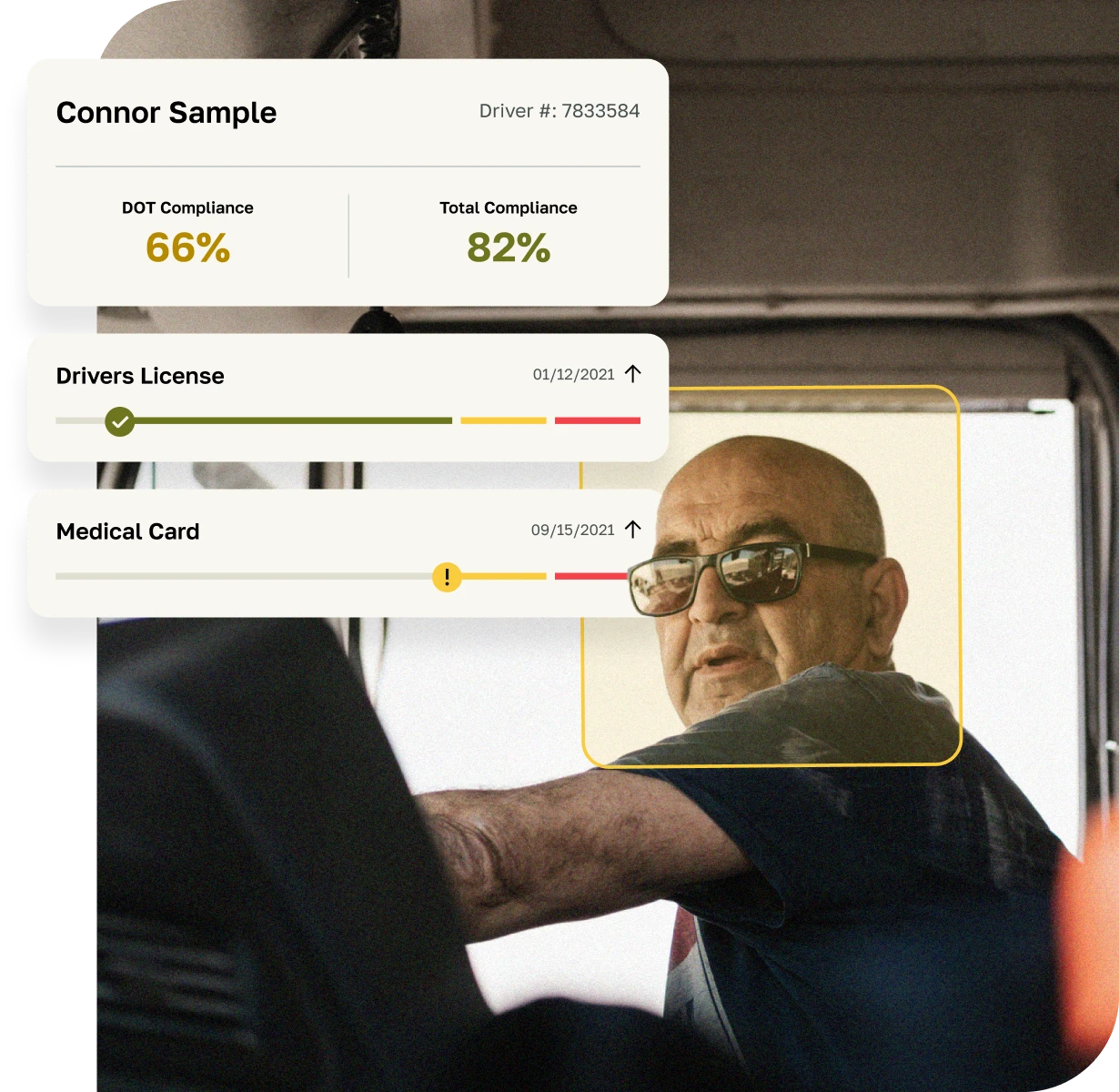


Manual compliance processes have long been a burden on fleet operations. From managing endless paperwork and chasing down missing driver documents to preparing for DOT audits with fragmented systems, traditional compliance workflows are time-consuming, error-prone, and resource-intensive. In today’s high-risk regulatory landscape, where one misstep can lead to hefty fines, operational disruptions, or even out-of-service orders, these inefficiencies are no longer acceptable.
Fleet managers are under increasing pressure to juggle safety, compliance, and operational performance, all while trying to reduce costs and retain drivers. And with the regulatory environment growing more complex each year, relying on manual methods is not only inefficient but risky.
Why It Matters:
Agencies like the FMCSA (Federal Motor Carrier Safety Administration) and the DOT (Department of Transportation) continue to raise the bar on safety and compliance expectations. The CSA (Compliance, Safety, Accountability) scoring system holds carriers publicly accountable for driver behavior, vehicle condition, and documentation lapses. As these regulations evolve, fleets must not only stay current, they must stay ahead.
That’s where fleet compliance automation becomes essential. Automating key compliance functions, such as driver qualification file (DQF) management, license and medical certificate tracking, electronic logging device (ELD) monitoring, and real-time safety alerts, not only reduces the administrative load but also enhances visibility, improves accuracy, and drives proactive decision-making.
In a competitive industry where margins are tight and reputational risks are high, automation is no longer a “nice to have”, it’s a strategic advantage. Fleets that embrace compliance automation are better equipped to protect their CSA scores, retain drivers, reduce violations, and stay operationally efficient in the face of ongoing regulatory change.

What Is Fleet Compliance Automation?
Fleet compliance automation is the use of software, telematics, and integrated digital platforms to automatically manage, monitor, and document regulatory requirements across fleet operations. Instead of relying on manual checklists, spreadsheets, and paper files, automation creates a centralized, rules-driven system that continuously tracks compliance status, flags risks, and prompts corrective action in real time.
At its core, fleet compliance automation shifts compliance from a reactive, administrative burden to a proactive, operational advantage. It enables fleets to consistently meet requirements set by organizations such as the Federal Motor Carrier Safety Administration (FMCSA) and the Department of Transportation (DOT), while protecting CSA scores under the Compliance, Safety, Accountability (CSA) framework.
Key Components of Fleet Compliance Automation
Driver Qualification File (DQF) Automation
- Digitizes and centralizes all required driver documents
- Automatically tracks expirations for CDLs, medical cards, background checks, and drug/alcohol testing
- Flags missing or non-compliant records before they become audit issues
- Streamlines driver onboarding and offboarding
Hours of Service (HOS) Tracking
- Automatically captures and monitors driver driving hours
- Helps prevent HOS violations by identifying risks before limits are exceeded
- Supports fatigue management and safer scheduling practices
ELD Integration
- Connects Electronic Logging Devices directly to compliance platforms
- Ensures accurate, tamper-resistant records
- Simplifies data retrieval during roadside inspections and audits
Maintenance and Inspection Scheduling
- Automates preventive maintenance intervals based on mileage, engine hours, or time
- Tracks DVIRs and inspection outcomes
- Reduces out-of-service events caused by missed or delayed maintenance
Safety Event Reporting
- Captures incidents such as harsh braking, speeding, collisions, and violations
- Links safety events to driver and vehicle records
- Enables faster incident response, documentation, and corrective action
Real-Time Alerts and Compliance Dashboards
- Sends automatic notifications for upcoming expirations, violations, or risks
- Provides at-a-glance visibility into fleet-wide compliance status
- Enables managers to prioritize issues and allocate resources efficiently
Why This Matters
By integrating these components into a single automated system, fleets gain continuous compliance monitoring, reduce human error, and dramatically cut administrative workload. More importantly, fleet compliance automation supports safer drivers, healthier CSA scores, and more resilient operations, without slowing the business down.
Operational Challenges in Manual Compliance Management
Despite the best efforts of fleet and safety managers, manual compliance management remains one of the biggest obstacles to operational efficiency and regulatory readiness. Relying on outdated processes and disconnected systems leads to a range of costly and avoidable challenges that put fleets at risk.
Here’s a breakdown of the most common problems faced by fleets that still manage compliance manually:
1. Paper-Based Recordkeeping
Many fleets still rely heavily on physical documents and filing cabinets to manage driver qualification files (DQFs), inspection reports, and compliance checklists. This not only consumes valuable space and time, but also makes it difficult to track changes, locate documents during audits, or verify compliance in real-time. Paper records are also more susceptible to loss, damage, and misfiling—especially during staff transitions or inspections.
2. Disconnected Systems Across Departments
When HR, safety, operations, and maintenance teams operate on separate platforms (or worse, spreadsheets), critical compliance data becomes siloed. This lack of integration creates gaps in oversight—such as a newly hired driver being cleared to drive before their DQF is complete, or a vehicle being dispatched without confirmation of a passed inspection. These disconnects increase the risk of violations and accidents, especially when time-sensitive compliance requirements slip through the cracks.
3. Inconsistent Driver File Updates
Keeping every driver’s records current—licenses, certifications, medical exams, drug test results, training logs—is a complex and ongoing task. With manual systems, it’s easy to overlook updates or miss renewal deadlines. This results in incomplete or non-compliant DQFs, which not only hurt CSA scores but can lead to out-of-service drivers during roadside inspections or audits.
4. Missed Renewals and Expirations
CDLs, medical cards, background checks, annual reviews, MVR pulls—each has its own expiration date and documentation requirements. When fleets rely on human memory, sticky notes, or outdated calendars, these critical renewals are often missed. This can result in costly fines, regulatory penalties, and operational delays that could have been avoided with proper tracking.
5. Audit Preparation Burden
Preparing for a DOT audit or FMCSA investigation with a manual compliance system is both stressful and time-consuming. Teams often spend days or weeks digging through files, verifying documents, and scrambling to fill gaps. The risk of an unfavorable audit outcome increases significantly when records are disorganized or missing—even if the fleet was otherwise compliant.
6. High Administrative Overhead
Manual compliance requires a significant investment of staff time and labor just to stay above water. Safety and compliance managers must continuously chase paperwork, track expiration dates, and verify compliance status. This takes time away from higher-value activities like proactive safety planning, coaching, and data analysis. Worse, even the most meticulous manual efforts are still vulnerable to human error.
Manual compliance systems are not only outdated—they’re a liability. They limit visibility, slow down workflows, and expose fleets to unnecessary risk. In contrast, automated systems streamline compliance tasks, close operational gaps, and free up your team to focus on proactive safety and growth.
How Fleet Compliance Automation Streamlines Operations
Fleet compliance automation doesn’t just simplify regulatory processes—it creates a foundation for more efficient, transparent, and scalable operations. By replacing manual tasks with automated workflows and integrating real-time data, fleets can improve compliance accuracy, reduce downtime, and empower teams to work more proactively.
Here’s how fleet compliance automation delivers real operational impact:
1. Centralized Compliance Data
Automated compliance platforms serve as a single source of truth for all compliance-related information. Rather than juggling spreadsheets, paper files, or disconnected databases, fleets gain a unified dashboard where all driver, vehicle, and regulatory documents are securely stored and accessible.
- Managers can instantly view the status of each driver’s qualification file, license, or medical certification.
- Maintenance teams can track inspections and service records in the same system.
- HR and safety departments can collaborate using consistent, up-to-date information—eliminating version control issues and siloed workflows.
This centralization ensures real-time visibility, improves decision-making, and reduces the risk of overlooked compliance issues.
2. Automated Alerts and Notifications
One of the most powerful features of fleet compliance automation is the ability to proactively manage deadlines through automated alerts.
- Drivers, managers, and admins receive timely notifications for upcoming CDL, medical card, drug/alcohol test, and certification renewals.
- Vehicle inspection and maintenance reminders are automatically triggered based on mileage, time intervals, or ELD data.
- If a compliance item becomes overdue or falls out of status, the system escalates the issue for immediate resolution.
These real-time alerts prevent last-minute scrambles, reduce the risk of expired documents, and help fleets avoid fines, violations, and driver downtime.
3. Digital Driver Qualification File (DQF) Management
Driver qualification file management is one of the most audit-sensitive areas of compliance. Automation streamlines this process by digitally tracking every component of a DQF—from initial onboarding to ongoing monitoring.
- The system automatically flags missing, expired, or incomplete documents.
- Onboarding workflows guide HR and compliance teams through every required step—from MVR pulls to employment verifications—ensuring nothing is overlooked.
- When a driver leaves the company, automated offboarding processes archive their records in accordance with DOT retention requirements.
The result: Faster, more consistent onboarding, fewer manual errors, and full audit readiness at all times.
4. Integration with Telematics and ELDs
Compliance automation platforms integrate with ELDs, GPS systems, and telematics devices to capture critical driving data in real time.FMCSA audit support
- Hours of Service (HOS) data is automatically logged and monitored, helping prevent violations before they occur.
- Driver behavior events—such as harsh braking, speeding, or idling—are linked directly to individual driver records for coaching and compliance tracking.
- Compliance dashboards display real-time safety scores, vehicle health, and HOS statuses, giving fleet managers a full view of operational risk.
This level of integration empowers fleets to shift from reactive compliance management to proactive performance oversight.
5. Improved Audit Readiness
Preparing for a DOT or FMCSA audit can be daunting—especially if documentation is scattered or incomplete. With automation, all relevant records are digitally stored, organized, and retrievable on demand.
- Audit folders can be created and exported in minutes, not days.
- The system ensures that retention schedules are followed, documents are version-controlled, and compliance timelines are clearly recorded.
- Automated reporting capabilities allow for fast, consistent data generation for internal reviews or formal audits.
In short, fleet compliance automation makes your fleet audit-ready 24/7, reducing stress, improving outcomes, and saving valuable time.
By automating critical compliance functions, fleets can eliminate manual errors, reduce administrative burden, and respond faster to emerging risks. More importantly, they can focus on strategic initiatives like safety improvement, cost reduction, and driver retention—confident that their compliance foundation is solid and scalable.

Key Benefits of Fleet Compliance Automation
Adopting fleet compliance automation isn’t just about streamlining paperwork—it’s about transforming how your organization manages risk, ensures regulatory compliance, and operates on a day-to-day basis. When implemented effectively, automation delivers measurable improvements across safety, efficiency, and business performance.
Here are the most impactful benefits:
1. Reduced Administrative Burden
Manual compliance tasks—like tracking license renewals, pulling MVRs, and updating driver qualification files—can eat up hours of your staff’s time each week. With automation:
- Routine tasks are digitized and simplified through workflows and alerts.
- Teams no longer have to chase down paperwork or manually check expiration dates.
- Compliance documentation is automatically filed and stored in one system.
This frees up valuable time for HR, safety managers, and fleet admins to focus on higher-value work, such as driver coaching, safety initiatives, and strategic planning.
2. Increased Accuracy and Fewer Compliance Violations
Even small errors—like a missing signature or expired medical certificate—can lead to CSA score hits, failed audits, or DOT penalties. Automated compliance systems significantly reduce human error by:
- Ensuring documents are complete, accurate, and up to date.
- Using validation rules to prevent incomplete submissions.
- Prompting immediate action when a compliance risk arises.
As a result, fleets experience fewer violations, better audit outcomes, and stronger regulatory performance.
3. Faster Driver Onboarding and Offboarding
Delays in driver onboarding due to manual paperwork bottlenecks can result in lost productivity and missed revenue. Automation speeds up the process by:
- Providing standardized, digital onboarding checklists.
- Automating background checks, MVR pulls, and document collection.
- Alerting managers to incomplete or missing items in real time.
On the flip side, offboarding is also streamlined—ensuring required records are retained or archived, while removing terminated drivers from active compliance workflows. This ensures cleaner records, reduced liability, and improved compliance during audits.
4. Enhanced Visibility into Fleet Compliance Status
With manual systems, it’s often difficult to see where you stand—what’s overdue, what’s non-compliant, or which drivers are at risk. Fleet compliance automation offers:
- Real-time dashboards showing driver, vehicle, and fleet-wide compliance metrics.
- Custom reporting tools to track performance by region, team, or compliance area.
- Alerts and visual indicators that make it easy to prioritize issues.
This level of visibility allows fleet managers to make faster, data-driven decisions, and take corrective actions before issues become violations.
5. Lower Risk of Fines, Penalties, and Downtime
Missed deadlines and incomplete records can result in serious financial and operational consequences, including:
- Fines from DOT audits or roadside inspections.
- Out-of-service orders for drivers or vehicles.
- Lawsuits or insurance premium hikes after preventable incidents.
By keeping your fleet in a state of continuous compliance, automation greatly reduces the chances of these costly events and helps maintain a positive safety and compliance reputation.
6. Improved Safety and Operational Efficiency
When compliance is automated, it becomes a natural part of daily operations—not an afterthought. This leads to:
- Proactive risk identification (e.g., drivers consistently nearing HOS limits or vehicles missing inspections).
- Streamlined communication between departments (HR, safety, dispatch, maintenance).
- Fewer breakdowns, delays, or service disruptions due to compliance-related oversights.
Ultimately, automation fosters a culture of accountability, consistency, and proactive safety, which directly contributes to fewer accidents, better performance, and higher driver satisfaction.
Fleet compliance automation is not just a tool for staying within the rules—it’s a strategic asset that enables fleets to run smarter, safer, and more efficiently in a highly regulated and competitive industry.
Conclusion
Manual compliance processes may have worked in the past, but they are no match for the complexity, volume, and speed of modern fleet operations.
By adopting fleet compliance automation, organizations can:
- Eliminate the administrative burden of manual data entry, filing, and tracking
- Reduce compliance violations through real-time monitoring and proactive alerts
- Accelerate driver onboarding and improve offboarding workflows
- Gain full visibility into the compliance status of drivers, vehicles, and assets
- Avoid costly fines, penalties, and operational downtime
- Strengthen safety performance and reinforce a culture of accountability
Whether you operate a fleet of 10 or 10,000 vehicles, the ability to automate and centralize your compliance efforts is a strategic advantage that improves day-to-day operations while preparing you for long-term growth.
Don’t wait for a compliance audit or violation to expose gaps in your process. Start streamlining your operations today with fleet compliance automation and position your fleet for safer, smarter, and more scalable success.